| In this post, we will talk about: 1. What is CRM ? 2. Why Most CRMs are not eCommerce friendly ? 3. How to determine which CRM is best for you? |

As he carefully browsed the web looking for leads on how to grow and manage his expanding eCommerce business, he kept on coming across the same buzzword: CRM – it was on:
Everyone seemed to swear by it. eCommerce CRM helped me:
- Reach new customers.
- Increase my customer retention rate.
- Expand my eCommerce business internationally.
- Respond to customer queries faster and decrease bounce rate
- Increase customer satisfaction and quantity of returning customers.
People were writing about CRM across the web, as if it were the ‘newest’ religion since Madonna got hooked on Judaism. 
Picture credits: Screenshot from Madonna’s ‘Die Another Day’ video clip released on Youtube (below).
Madonna putting on phylacteries in her clip for ‘Die Another Day’ released in 2002 symbolizing her fight against her own ego and the incorporation of Jewish symbolism in her art.
But CRM is not news and has been around for years, helping business owners across virtually every industry on the planet with their Customer Relationship Management. But some people are just beginning to learn about the fantastic things having a good CRM can do for their eCommerce business and still have some basic questions they are looking for answers to.
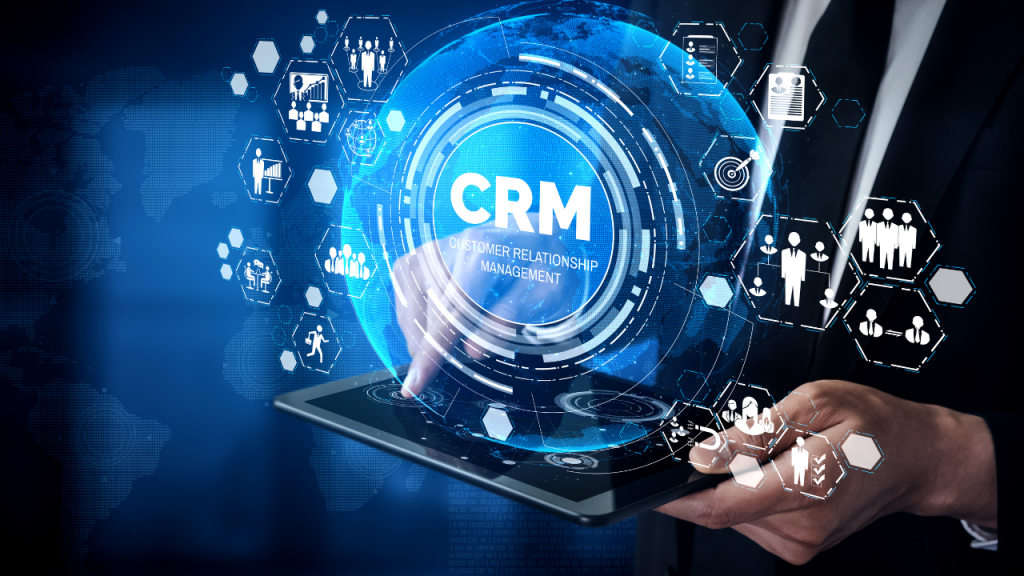
What is CRM ?
CRM as I mentioned earlier is a tool or software which can help a business with their
Customer
Relationship
Management needs.
Meaning it is a system which first and foremostly helps you manage past, present and future interactions with customers. I say this because this is one of the greatest features of CRMs – it is omniscient or all-knowing in many ways. Like an oracle of sorts it can provide you with
- data
- analytics
- and predict future customer trends.

Image by Iva Balk from Pixabay. CRMs are as close to an oracle as an eCommerce seller can get.
In the present, it can help:
- Automation & time saving
- Increasing sales
- Pinpoint issues through customer feedback
- Communicate with customers around the world
- Aggregate all your seller accounts into one easy-to-use space
- Make sure all queries get answered in record time
- Manage communication with customers by sending out customized templates at crucial points in the sales process ( such as when an item is shipped or received by the customer or immediately after a purchase is made).
As far as the past goes. CRMs are powerful in the sense that they:
- Save all previous customer interactions and communications. Making it easy to draw on old customer data for a variety of reasons:
- Cross/up – selling
- Handling customer disputes and tickets
- Reviewing shopping trends
- Identifying fraudulent customer claims.
- Provide sellers with data security (past, present and future) meaning that even if something should happen to your seller account on eBay or Amazon for example – all of your client information and data is safely stored on your CRM’s servers!

Photo by Markus Spiske on Unsplash
Data security is a crucial CRM feature.
CRM Strategies
CRMs combine all these components in order to analyze past data and improve the customer experience and customer relationship with an eCommerce business in order to maintain and drive present and future sales.
The data and information collected through a CRM can ultimately be translated into ‘CRM strategies’ such as:
- Identifying and dividing customers into groups based on common denominators such as single fathers who shop for their children online.
- Understanding consumer behaviors and needs for example selling new iphone accessories due to new ways in which customers are using their phones (GPS navigation, entertainment, camera, etc…)
- Actively making changes due to changing consumer preferences, for example answering customer queries within the hour and not the day since buyers expectations have shifted in the ‘instant economy’.
- Customer relationship cycle iterations meaning making changes to the CS cycle based on trial, error and experience. A simple example is, setting up an automated post purchase template asking for feedback 10 days after the item’s delivery. But you receive messages from customers 5 days after the item’s delivery thanking you for your service or asking you where they can leave product feedback. This should signal to you that you need to bump up that automated message to 4 days after purchase and not 10.
- Using customer feedback to customize products to customer needs, for example, you sell a men’s shaving kit with no extra razors yet you get so many queries regarding extra razors that you decide to include 3 extras in the pack.
Photo by Patrick Coddou on Unsplash

Who knew there was a connection between razors and choosing the right CRM ?
Most CRMs are not eCommerce friendly
Now that you have a clearer idea of what CRMs are and what they can do for your eCommerce business, it is important to understand that there are hundreds of CRMs out there and the vast majority were not and are not designed for eCommerce sellers. Most CRMs are geared towards businesses who provide services to businesses (B2B) as well as businesses who sell to (or provide services for) consumers (B2C). Some examples of industries which use CRMs include:
- CPAs
- Lawyers
- Architects
- Clinics
But why ? What is lacking in the vast majority of CRMs in terms of eCommerce ?
- Most CRMs do not integrate well with marketplaces like eBay and Amazon. Practically speaking this means that not all the data you need gets imported or the CRM itself doesn’t update in real time or it lacks key functions for everyday operations.
- Many established CRMs are simply not equipped to keep up with eCommerce which is an extremely diverse and dynamic industry. Marketplaces are constantly changing and updating their policies and features and you need a CRM which can grow in tandem with your marketplaces, a CRM which possesses agile development methodologies.
- Many CRMs out there are meant to work with one business at a time yet many eCommerce sellers have multiple stores on Shopify, eBay, Amazon, Jet – you name it. And they need all their customer service management data and info channelled into one space. This concept of multi-channel retail vs. single- channel retail is more of an eCommerce singularity and therefore requires special attention. Of course it exists in other industries just fewer and farther between and those industry specific CRMs are just not build with a ‘multi-mindset’.
- Following up on the previous point, adapting a CRM to different marketplaces is an expensive process which requires ongoing communication with the service provider and numerous changes. Also, in instances where it does exist, those tools provide very superficial integrations which can very quickly lead to mistakes which translates into loss of profitability. More often than not, a seller is forced to use additional add-ons which complicates the work process where it should be simplifying it and of course increases your out-of-pocket costs.
- Most CRMs are based on the fundamental model of using a CRM to develop the sales process in order to trigger revenue growth. In contrast, eCommerce businesses are more concerned with user experience and satisfaction which may include aspects such as:
- Customer retention
- User behaviour (before/during/after purchase)
- Buying trends
- Customer feedback as the single most important engine for growth and sales.
When a CRM lacks attributes which contribute to basic and necessary industry specific needs, it renders them obsolete and seriously narrows down the pool of eligible candidates to choose from for your eCommerce business. Also, consider the fact that when a CRM is loaded with tons of functions you don’t need it makes it extremely hard to navigate and use and slaps an unjustified price tag on it – functionally, you end up paying for features you do not need and features you do need are just not there.
How to determine which CRM is best for your eCommerce business ?
Photo by Cam Morin on Unsplash
When searching for an eCommerce CRM you want software which will help you mine consumer patterns and gain an understanding of ever changing consumer behaviour. You want to be able to collect and use shopper – specific and niche- specific data which will help you drive sales. In order to do this, you will need a CRM which:
- Collects customer information and details – You want a CRM which will provide you with convenient access to a customer’s shopping history, customer support interactions, transactions and consumer patterns in an organized and usable manner.
- Integrates automated messaging templates – It is important to stay in contact with customers at every stage of the conversion cycle and that is why it is crucial to choose a CRM which directly integrates with your marketplace of choice’s messaging platform. Not only should it have the ability to integrate but it should come with readymade templates as well as customizable templates. This is a super important function as you may need to send hundreds or even thousands of these messages a week and you can’t hand write them all and make sure they all get sent out in a timely fashion (that is what automated messaging is for – say 24 hours after an item has been shipped). Some good examples of these absolutely necessary templates include:
- Your item has been shipped
- Out of stock message
- Back in stock message
- Shipment has been delayed
- Item instructions
- Feedback request
- Thank you for purchasing with us
- Social media marketing and analytics – Social media is one of the most crucial places for eCommerce brands to have a presence. The term ‘social commerce’ stems from this deep inseparable connection between online social interaction and eCommerce. CRM Social media functions allows you to:
- Track social media product trends or general trends which have commercial potential
- Have a consistent presence
- Connect with existing and potential customers
- Keep clients updated with any major changes or pertinent news regarding your business
- Thank your customers personally for their loyalty

Photo by Jakob Owens on Unsplash
- Analytics and data – It is important to choose a CRM which provides you the capability to view analytics, which goes beyond consumer information and more into consumer trends and ‘predictions’ based on consumer patterns. It is important to find a CRM which knows how to take ‘raw data’ and translate it into actionable insights for your business in a way that is easy to read and understand. Analytics in its most basic form looks at past purchases in order to predict what a consumer may want now or in the future but can be used to hone in on target markets, consumer gender and a host of other variables which can help build an effective marketing strategy.
- Customizable marketing – It is great to gather loads of information about your customers’ habits and preferences but the real question is what can you do with this information and does the CRM you are looking into provide targeted customizable marketing ? An example of customized marketing could be sending out targeted emails to customers who have not yet finished a purchase – this interaction allows you to have another chance at trying to convert them. The email might tell them that the item they were interested in is almost out of stock. Additionally, you want to look out for CRMs which have automated cross-selling and up-selling tools which can be customized to specific consumer segments and audiences.
- Operational automation – You want a CRM which does the thinking and organizing for you. This means having information organized in easy and accessible ways. One example is using ‘consumer stories’ ie all of a consumer’s information and interactions appear in one feed much like on Facebook or Instagram. Another option is the CRM divides messages categorically:
- Service issues
- Pending orders
- Invoices which are overdue.
Subivi CRM

As I am sure you already know, there are a variety of eCommerce CRMs on the market but as far as I am concerned, the only CRM I know of which is specifically tailored to integrate seamlessly with eCommerce marketplaces, is Subivi eCommerce CRM.
.
What makes Subivi unique when compared with other eCommerce CRMs?
- Supports international eCommerce – When selling internationally or considering expanding beyond your eCommerce business to another country. You have one key barrier: language. Subivi is unique in that it has a fully integrated messaging tool in its system which automatically translates incoming and outgoing messages.
- We are former eBay sellers – Subivi is one of the only CRMs developed by eBay sellers for eBay sellers meaning we intimately understand eCommerce seller needs in a way that other CRMs simply can’t. We know how frustrating using eBay’s ticketing system can be, for example and that is why we have developed a tool to make your life as an eCommerce entrepreneur that much easier.
- Full-cycle customer support – We like to think of ourselves as a ‘full package’ customer support solution. We truly believe that partial solutions only make things more complex. That is why we created the ultimate eCommerce ecosystem in order to take care of all your customer support needs for all your eCommerce businesses in one convenient place.
- Interface – Many CRM tools are outdated and feel like they have just recently lived inside some programmer’s garage. That’s why we decided to put our user interface and user experience first. We believe that just because you are working does not mean the software you use should not feel like you are on vacation.

Photo by NeONBRAND on Unsplash
The garage in which most CRMs on the market lived and continue to live – not user friendly is an understatement.
- Automation – Subivi aims to provide maximum automation of all those tedious, boring tasks which no eCommerce seller wants to deal with. This includes:
- Automated templates
- Automated messages which can be programmed to be sent out at a predetermined time (say 24 hours after a product has been shipped).
What are the advantages of using a CRM like Subivi ?
- Beat the competition – Customer service can be the single most important deciding factor when a customer is deciding between two similar items for sale. Only 38% of eBay sellers use a CRM – so by using one you are differentiating your level of customer service dramatically.
- Buyer satisfaction goes through the roof – CRMs help predict and preempt customer issues before they even happen allowing you to provide the best customer experience possible and allowing you to convert one-time shoppers into long-term customers.
- Time is of the essence – CRMs are built to be efficient and save you time. Instead of logging into each account and individually responding to each and every customer query and complaint – all messages are collected in one place and sorted based on parameters which help you stay on top of things.
Summing It Up
There is no debating that finding an excellent CRM is crucial to the growth of your eCommerce business. Consider that:
$62 billion is lost annually due to bad customer service
According to an article in Forbes magazine.
You do not want to become a part of that statistic. You want to find the ultimate CRM which will:
- Help save you precious time.
- Create an awesome customer experience.
- Culminate in increased sales and an increased cash flow by association.
Over to you – Please comment and let me know which feature is absolutely necessary for you in an eCommerce CRM ?
Which eCommerce CRM are you currently using – are you satisfied ? Why or why not ?
———————————————————————————————————————
Keywords/Research:
Articles:
Google search words:
A dummies guide to choosing the right CRM ecommerce